
What If Everyone Had Enough? A Vision for a Fairer Future
- Feb 13, 2025
- 4 min read
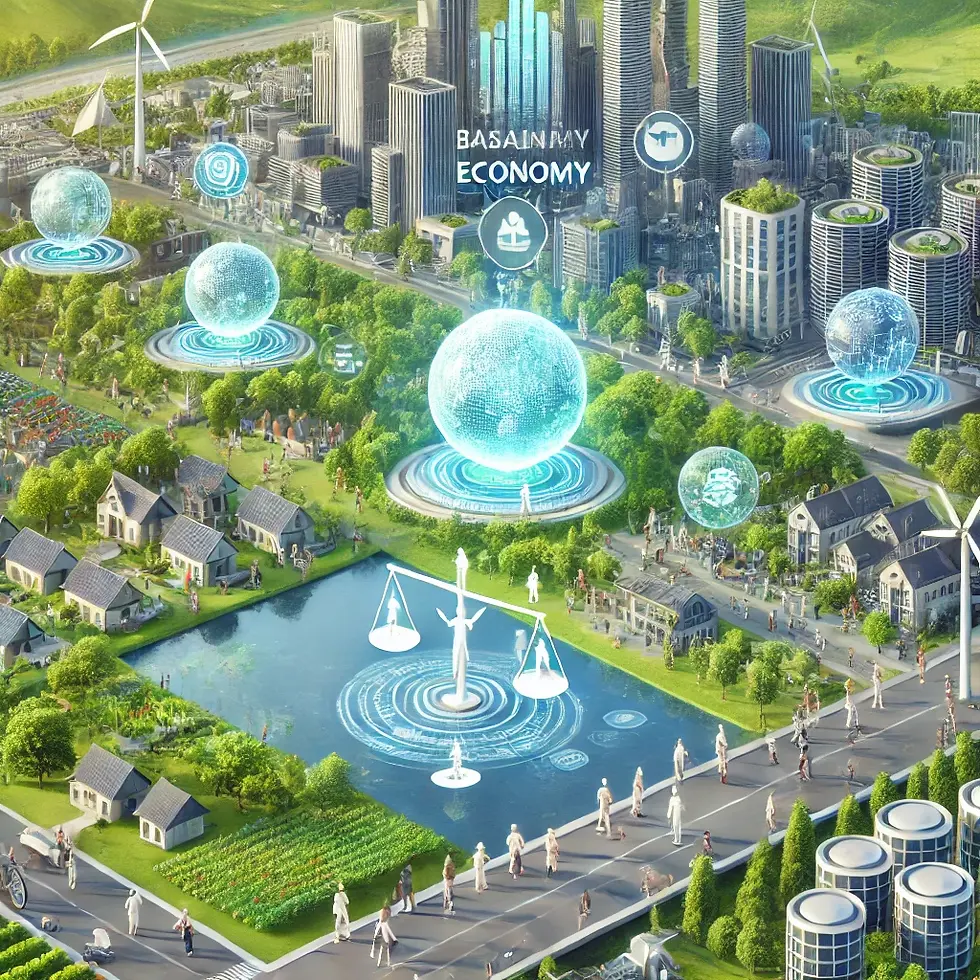
Could the World Function on Equal Wealth and Opportunity?
What if every person on Earth had everything they needed—food, housing, healthcare, and education—without struggling to survive? What if money wasn’t a barrier to a good life?
It might sound like a dream, but is it possible? If we distributed all the money in the world equally, each person would have about $10,000. But could people actually live on that amount forever, or would the money disappear into an endless cycle of spending and inequality?
The truth is, our current system wasn’t designed for fairness—it was built on competition, wealth accumulation, and scarcity. But that doesn’t mean it has to stay that way. What if we started working toward a world where everyone thrives, and no one is left behind?
Let’s explore how we got here, why inequality exists, and how we can start creating a fairer future—one step at a time.

Why Is Wealth So Unequally Distributed?
Today, the richest 1% of people own more than the bottom 50% combined. Billionaires accumulate wealth while millions struggle with basic needs. Why does this happen?
1. The System Rewards Wealth Over Work
The more money you have, the easier it is to make more. Investments, real estate, and business ownership keep the wealthy growing richer.
Meanwhile, most people trade time for money, working jobs that barely cover their expenses.
2. Essential Services Are Profitable
Housing, healthcare, and education—basic human needs—are treated as businesses, not rights. This keeps costs high and access limited.
3. Automation and AI Replace Jobs Without Redistribution
As robots and AI take over tasks, companies make higher profits—but workers don’t see the benefits. Instead of working less, people are left unemployed.
4. Wealth Hoarding Creates Artificial Scarcity
The world produces enough food, resources, and technology for everyone, but access is controlled by market forces, leaving some without while others have more than they could ever use.
So if we know the system is broken, what’s the solution?
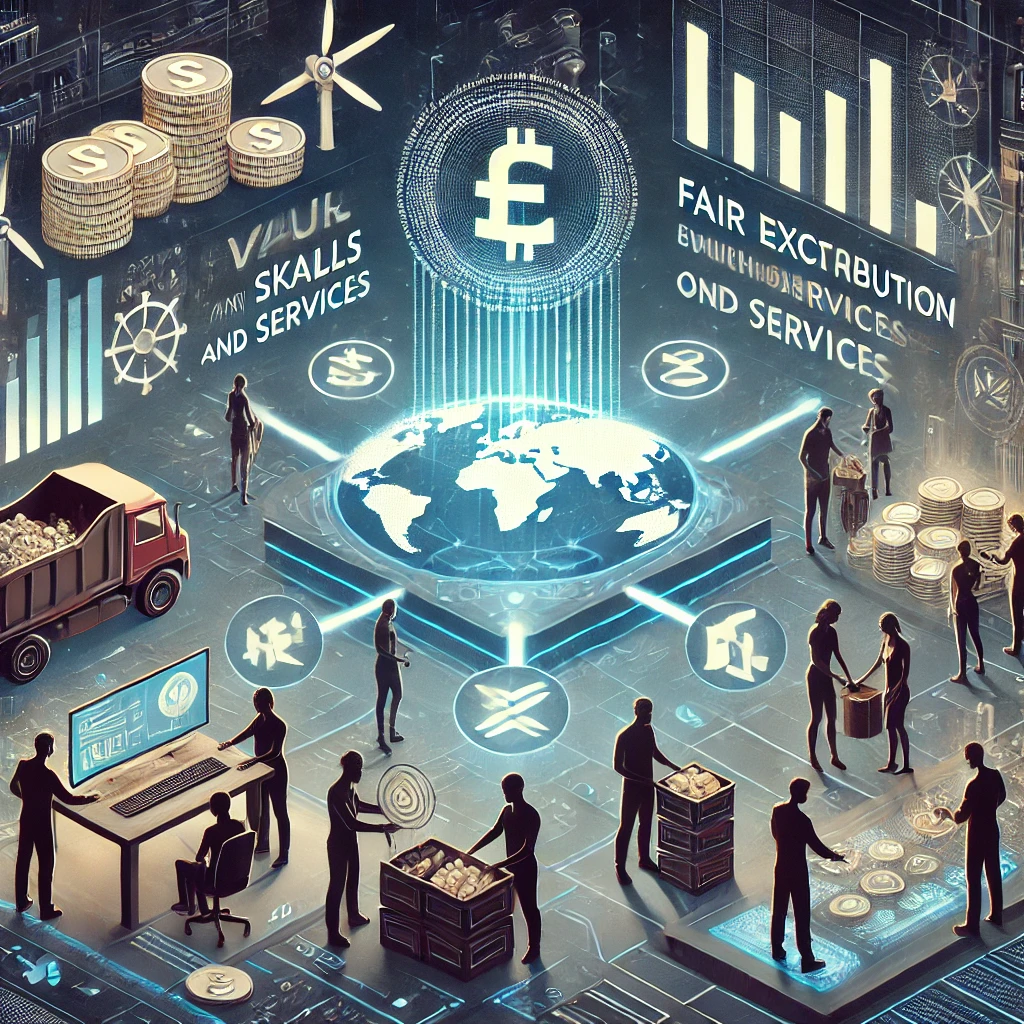
A Vision for a Fairer Economy
Imagine a world where money isn’t the goal—quality of life is. A world where:
✔ Everyone has a home that fits their needs
✔ Healthcare and education are guaranteed, not luxuries
✔ People work to contribute, not just to survive
✔ Resources are distributed based on necessity, not profit
This isn’t about taking away motivation or ambition—it’s about ensuring everyone has a foundation to build a better life.
How Would It Work?
Instead of relying on wealth accumulation, we could shift toward a value-based economy, where:
✔ Work is distributed fairly, and no one is overworked
✔ Basic needs (housing, food, healthcare) are covered for all
✔ Money (or an alternative system) is used to ensure fair access, not endless profit
✔ AI and automation allow people to work less, not become unemployed
This wouldn’t mean everyone gets the same house, car, or job—but it would ensure no one is left struggling while others hoard excess wealth.

A 100-Year Plan for Change
We won’t fix the system overnight, but small, intentional changes over time can create real impact. Here’s a step-by-step roadmap for change:
2025–2035: Raising Awareness & Policy Shifts
✔ Start conversations about wealth fairness through blogs, social media, and documentaries
✔ Support Universal Basic Income (UBI) trials to test economic redistribution
✔ Advocate for financial education and resource-sharing initiatives
2035–2055: Economic Reform & Alternative Models
✔ Expand local and digital economies (cooperative businesses, decentralized finance)
✔ Push for AI-driven resource management for fairer distribution
✔ Introduce "work-sharing" systems to reduce unemployment and burnout
2055–2085: Restructuring Society
✔ Governments shift toward resource-based economies
✔ Wealth inequality is reduced through progressive economic policies
✔ Automation and AI allow people to work less while earning more
2085–2100: Global Cooperation for a Thriving Future
✔ A new economic system prioritizes sustainability, fairness, and well-being
✔ Technology reduces labor needs, freeing people to focus on creativity, purpose, and personal growth
✔ Global governance ensures no one is left behind
Change won’t happen all at once, but every movement starts with an idea.
What Can You Do Right Now?
If we want a fairer future, we don’t have to wait for governments or billionaires to change—we can start small and build momentum. Here’s how you can take action today:
✔ Share this article—get people talking about what’s possible
✔ Support policies that promote fair wages, universal healthcare, and wealth redistribution
✔ Learn about alternative economies like Universal Basic Income (UBI) and resource-based models
✔ Start community-based initiatives (time banks, cooperative businesses, local food networks)
✔ Think critically about wealth and work—challenge the idea that endless accumulation equals success
The Future Is Ours to Shape
The world doesn’t have to be a place of extreme inequality. We have the resources, technology, and knowledge to build a system where everyone thrives, not just the privileged few.
It starts with rethinking wealth, work, and fairness. It starts with conversations like this one. And it starts with you.
What do you think? Could the world function on equal wealth and opportunity? Let’s start the conversation—leave a comment below and share your thoughts!
Comments